Proposal guide
How to Propose to an Indonesian Woman
A proposal in Indonesia touches three things at once: her culture, her faith and the law. Here is how to honour all three, and earn a yes from her family as well as from her.
By Sekar Updated July 2026 16 min read

If you love an Indonesian woman and you are thinking about the words, there is one thing worth knowing before you say them. In Indonesia, a proposal is rarely just between the two of you. It reaches back to her parents, her ancestors, her ethnic customs and her faith. Getting that right is what turns a hopeful question into a welcome one.
This guide walks you through it with care, and it is honest about how much variety there is. A Muslim Javanese family, a Balinese Hindu family, a Catholic family in Flores, a Batak Protestant family and a Chinese-Indonesian family will each hope for different things. So rather than one checklist, think in three layers.
Three layers: culture, faith and law
Every Indonesian marriage sits on three layers, and it helps to see them separately.
- Her culture. Her ethnic and regional customs, her adat, shape the proposal itself: who visits whom, what gifts are brought, and how the families speak to each other.
- Her religion. Her faith shapes the ceremony and, crucially, the legal path, because in Indonesia marriage and religion are bound together.
- The law. A legally registered marriage in Indonesia follows one recognised religion, which raises real questions for a foreign partner. Better to understand it early than to be surprised late.
Read all three below, then do the single most useful thing you can: ask her, gently and directly, what her family expects. Not everyone is traditional. Let her be your guide.
Layer one: her culture
Indonesia is home to hundreds of ethnic groups, and the proposal customs come from her culture more than from her religion alone. Two Muslim families can hold completely different lamaran if one is Javanese and the other Bugis. Here are the backgrounds you are most likely to meet.
Central Javanese (Solo and Yogya)
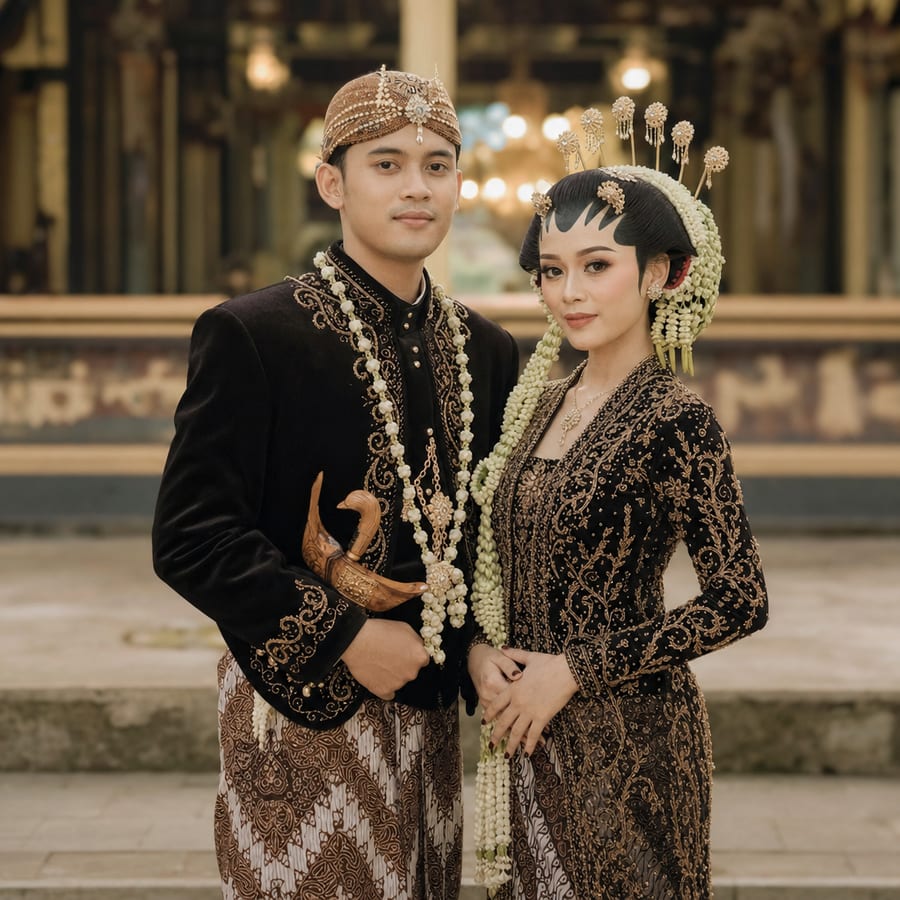
The heart of Javanese custom sits in the two court cities, Solo (Surakarta) and Yogya (Yogyakarta), and it is refined and indirect. A first quiet approach, nakokake or nontoni, tests whether the family is open, then the formal lamaran, an engagement token called peningset or paningset, and trays of srah-srahan or seserahan gifts. The wedding carries named rituals such as siraman, midodareni and the panggih meeting. Solo and Yogya share almost all of this and differ mostly in the style of dress and the fine detail of the rites. Read the softness in the room, because a Javanese yes is rarely blunt.
East Javanese (Surabaya and around)
The same Javanese roots and much the same vocabulary, lamaran, peningset, seserahan, but carried in a warmer and more direct manner than the courts. The coastal and Arek Javanese families around Surabaya tend to be plainer spoken, so you will feel less of the courtly indirectness, though the respect owed to elders is exactly the same.
Sundanese (West Java)
A neighbour to the Javanese, but its own people and language with its own steps. A first word, neundeun omong, then the proposal visit, narosan or lamaran, with seserahan. Do not assume Sundanese and Javanese customs match simply because the provinces touch. Warmth and politeness to elders carry the day.
Betawi (Jakarta)
The people of old Jakarta bring one of the liveliest proposals in the country. At the wedding the groom's party is stopped at the door for palang pintu, a playful gate of traded pantun rhymes and a show of silat that the groom's side must win to enter. The seserahan traditionally includes a roti buaya, a crocodile-shaped bread that stands for lifelong faithfulness. Expect humour, noise and a crowd.
Minangkabau (Padang, West Sumatra)
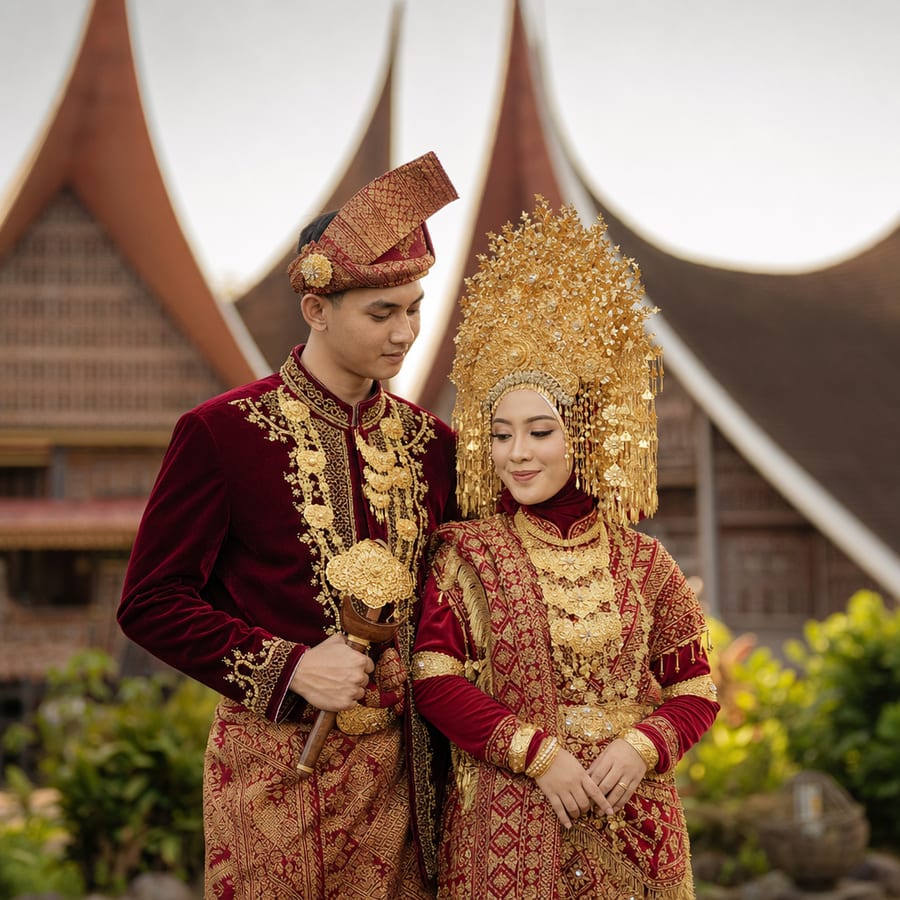
The Minangkabau are the world's largest matrilineal society, so lineage, the clan or suku, and family property pass through the women, and an in-marrying man joins his wife's house as an urang sumando. It is the custom that best shows a bride-gift is about alliance, not a man buying a woman. On the Pariaman coast the direction even reverses, with the bride's family offering uang japuik, also called bajapuik, to receive the groom. This is not universal, though: the highland heartland around Agam, Tanah Datar and Solok handles it differently, often without the money-pickup. And Minang families are devout Muslims who hold that adat rests on Islamic law, so the Islamic mahar sits alongside the adat. With both matriliny and faith in play, it is far better to talk it through early than to guess.
Batak (North Sumatra)
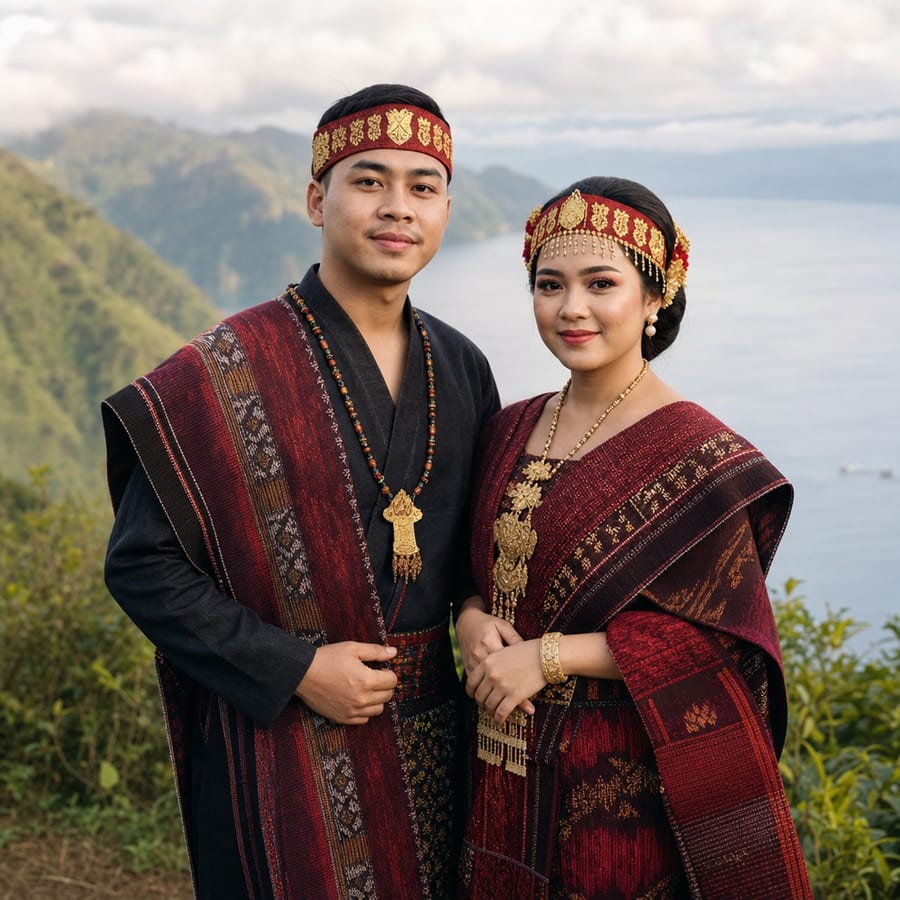
Clan, or marga, is central, and marriage joins two clans within the dalihan na tolu kinship system. A quiet talk, marhusip, comes first, then a formal negotiation of the bride-gift, marhata sinamot. If you were not born Batak, you usually need to be adopted into a marga first, a custom called mangain, so you carry a clan name and take your place in the kinship system before the marriage can go ahead, and so the marga continues after it. This is serious, communal and deeply structured, so lean on her family and an elder to guide you through it.
Bugis and Makassar (South Sulawesi)
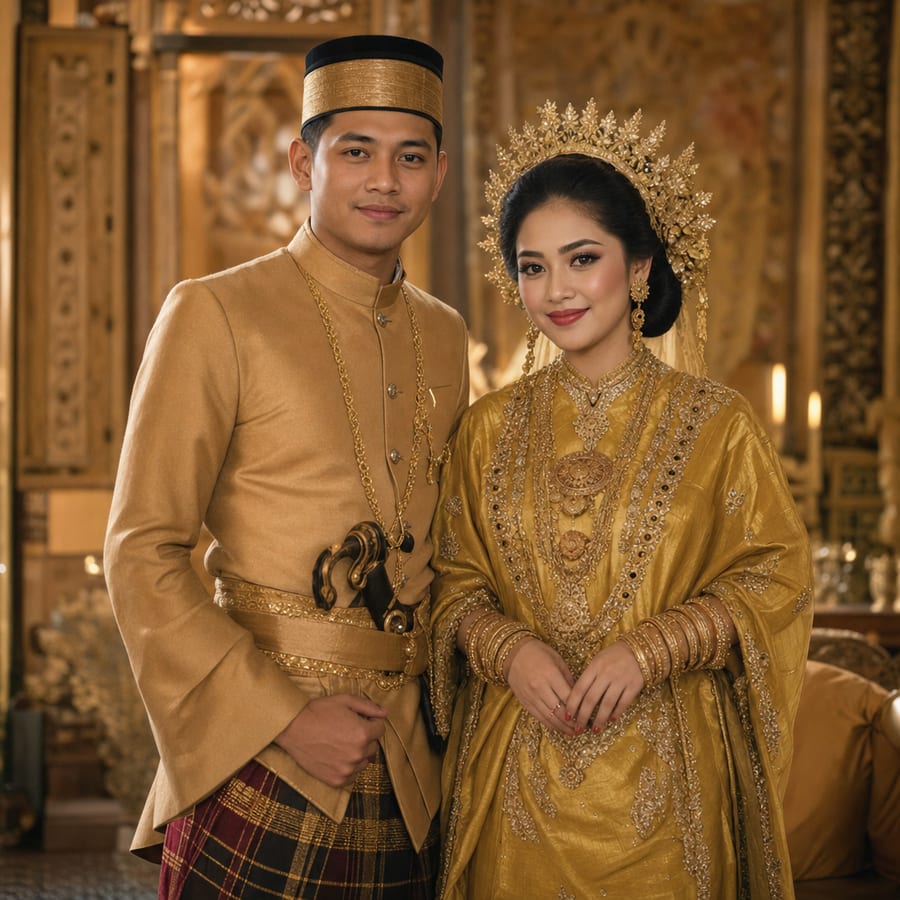
Known for uang panai, also called uang belanja, money the groom's side provides toward the celebration. It sits separate from the Islamic mahar, called sompa here, and the two should not be confused. Among Bugis-Makassar families the amount can climb high, especially where the bride is well educated or of noble descent, which a name like Andi, Karaeng or Daeng often signals. It is a mark of honour, not a price, but it is wise to learn where her family stands before the conversation, and there is more on the size of these gifts below.
Balinese
Balinese custom is patrilineal, so a daughter who marries traditionally leaves her family's lineage and joins her husband's, including his ancestral temple, with a farewell called mepamit that her family feels deeply. There is no bride-price as such, but there are ceremonial duties and offerings, and the respectful proposal path is memadik. Caste still lives quietly in names, so a title such as Ida Ayu, Anak Agung or Cokorda tells you she is of a high wangsa, and the customs will be kept with care.
Minahasa and Manado (North Sulawesi)
A world apart from the eastern islands, and not to be lumped in with them. The Minahasan people of Manado are largely Christian and known for a relatively egalitarian, modern outlook. The engagement centres on a warm family gathering and a church blessing, gifts are lighter than in bride-wealth cultures, and the mood is open.
Toraja (South Sulawesi highlands)
Also distinct, and not part of the Nusa Tenggara customs below. Torajan society is historically ranked, and marriage was traditionally kept within one's social class, so a family's standing matters. Buffalo, tedong, are the great measure of wealth, central to their famous funerals and to family prestige. Most Torajans are Christian today, alongside the old Aluk To Dolo beliefs. Ask her family how much of the old rank custom they still hold to.
Nusa Tenggara Timur: Flores, Sumba and Timor
Here live some of the most significant bride-wealth traditions in Indonesia, and they are their own world, separate from Sulawesi. The gift is called belis, historically livestock and woven cloth, and on Sumba horses and mamuli ivory ornaments. It binds two clans and carries reciprocal gifts back from the bride's side. Flores is strongly Catholic, while Sumba holds the Marapu faith alongside Christianity. Approach it with patience and real respect.
Chinese-Indonesian
Across faiths, Chinese-Indonesian families often keep the sangjit, a betrothal gift exchange held after the proposal and before the wedding. The groom's family brings trays of gifts in even numbers, and the bride's family keeps some and returns the rest. More on the items below.
Whatever her background, ask her, and if you can, an aunt or an uncle, to walk you through her family's specific custom. Trying to learn it is itself a kind of proposal.
Layer two: her religion
Her faith shapes the ceremony and sets the legal path. Here is what each tradition tends to ask around the engagement.
If she is Muslim
The religious engagement is the khitbah, often folded into the lamaran. Her father or male guardian, the wali, holds a central role, so direct your request through him, dress modestly, greet elders first, and leave alcohol out of any gift. The mahar, the dowry, comes later at the marriage contract, the akad nikah, and it belongs to the bride, not her family. Our Muslim wedding in Bali guide covers the ceremony and paperwork.
If she is Hindu (Balinese)
Beyond the memadik visit, a Balinese Hindu wedding is a religious event, and for a non-Hindu partner it can raise the question of a Sudhi Wadani, a Balinese Hindu affirmation, before a religious marriage. None of this is a barrier, but it deserves honesty and patience. See our Balinese Hindu wedding guide.
If she is Christian or Catholic
Protestant engagements often centre on a family gathering and a pastor's blessing. Catholic ones add a genuine Church process: the parish asks for baptism and confirmation records and a marriage preparation course, the Kursus Persiapan Perkawinan, which takes time, so start early. See our Christian wedding in Bali and Catholic wedding in Bali guides.
If she is Buddhist or Confucian (Konghucu)
Many Indonesian Buddhists and Confucians are of Chinese heritage, so the engagement blends a blessing at a vihara or klenteng with the sangjit and a tea ceremony, where the couple serves tea to elders as a mark of respect to family and ancestors. An auspicious date is usually chosen with care. Our Buddhist wedding in Bali guide has more.
Layer three: the law
This is the layer couples most often overlook, and it deserves a clear head. Indonesia has no secular civil marriage that stands apart from religion. A marriage is legally valid when it is performed according to the couple's religion and then registered, which has a few real consequences.
- You usually need a shared religion. Interfaith marriage is legally difficult in Indonesia. Couples commonly share a faith, one partner converts, or they marry abroad and hold a blessing in Bali.
- Where it is registered depends on faith. Muslim marriages are registered at the KUA, the religious affairs office. Non-Muslim marriages are registered at the civil registry, Catatan Sipil.
- As a foreigner you need documents. Expect to provide your passport, visa, and a Certificate of No Impediment, a CNI, from your embassy, translated and legalised.
- A blessing is not a legal marriage. A symbolic ceremony in Bali is beautiful and popular, but it does not register your marriage. Many couples do the legal step at home and celebrate here.
Talk about faith before you talk about a ring
In practice, a mixed-faith couple usually has one path inside Indonesia: one partner adopts the other's religion. A non-Muslim man marrying a Muslim woman will generally convert to Islam before the akad nikah, the marriage contract. Marrying a Balinese Hindu woman under Hindu rites means being registered as Hindu. A Batak Christian family will expect a church marriage the state recognises.
None of this is a push to convert. It is a reason to be honest early, with her and with yourself. Her family will ask, often during the lamaran, and they can usually tell the difference between a sincere decision and a box being ticked to get the wedding done. If you are unsure, say so and take the time. A promise about faith is read as a moral commitment here, not a formality, so do not make it lightly.
Here is the part couples most often miss. For her family, faith can matter deeply even when it seems not to matter much to the two of you. She may never raise it, never ask you to convert, never bring the topic to the table at all. The pressure can still be there, quietly, from parents and grandparents who are waiting to see what you decide. Do not let her carry that alone and unspoken. Talk about it together, openly, long before the ring, so it becomes a shared decision rather than a fault line that surfaces at the worst moment.
If neither of you wants to convert, some couples marry abroad, in a country that allows civil or interfaith marriage, then handle the family and cultural expectations back in Indonesia. It works, but it adds paperwork, and it does not remove the family conversation.
Because the details shift with your two nationalities and faiths, read our guide to Bali marriage legal requirements, and whether a Bali wedding is legal in your country, before you set a date.
Mahar, belis, sinamot: the bride-gift, explained
Across Indonesia you will hear words that, to a foreign ear, sound like a price on a person. They are not. A bride-gift is a custom of respect, seriousness and alliance between two families. Here are the main terms you may meet.
- Mahar (Muslim, everywhere): the Islamic marriage gift from groom to bride. It is often symbolic, gold or a meaningful sum, and it belongs to the bride herself, no one else.
- Seserahan / peningset (Javanese, Sundanese and beyond): trays of gifts for the bride at the engagement, clothing, cosmetics, prayer items, sweets. Tokens of care, not a payment.
- Sinamot (Batak): a bride-gift negotiated between clans that helps fund the wedding feast and honours the bride's relatives.
- Belis (Flores, Sumba, Timor): bride-wealth in livestock, cloth and, historically, horses or ivory, binding two clans, with gifts flowing back in return.
- Uang panai (Bugis, Makassar): money toward the wedding celebration, separate from the mahar, reflecting the bride's family standing.
- Uang japuik (Minangkabau, Pariaman): given by the bride's family to the groom, the reverse of what outsiders expect.
- Sangjit gifts and uang susu (Chinese-Indonesian): trays of gold, food, drink and money in red envelopes, in even numbers, with a portion returned. The uang susu, or milk money, thanks the bride's mother for raising her.
Why it is not buying a bride
Look at how the customs actually work and the idea of a purchase falls apart. The mahar becomes the bride's own property. The uang panai and the sinamot pay for the celebration that both families share. Gifts flow back from the bride's side, so it is an exchange, not a sale. Among the Minangkabau the direction reverses entirely. What every version has in common is a public promise that this man is serious, that two families are joining, and that the woman is honoured, not acquired.
How it is worked out
A bride-gift is agreed by respectful discussion between the families, not fixed like a shop price. Depending on the culture, it may reflect her education and profession, her family's standing, regional custom, and how many relatives are to be honoured. Some are ritual negotiations, like the Batak marhata sinamot, spoken through elders. Increasingly the couple shapes the number together. Your part is to approach humbly, usually through an older relative or a spokesperson, and never to bargain as if at a market. Willingness matters more than the amount.
When the number runs high, and reading a name
Be ready for the fact that these gifts can be large. A Bugis uang panai or a Batak sinamot can reach hundreds of millions of rupiah, and at the top end, into the billions. In those circles a figure like two hundred million rupiah can be considered modest, even affordable. A big number is almost always a signal of the bride's family standing, her education, and sometimes noble descent, rather than plain greed.
You can often read that descent in a name. Bugis-Makassar nobility carry Andi, Karaeng or Daeng; Javanese aristocracy use Raden, Raden Mas or, for a woman, Raden Ajeng; a Balinese Ida Ayu, Anak Agung or Cokorda marks a high caste. If her name, or her family's, carries one of these, expect the customs to be kept closely, approach with extra humility, and let a respected elder speak for your side. The number is a matter of honour, not a transaction, and an open family conversation, with a good planner alongside, almost always finds a path that works.
Ask her family: restu is the real yes
Indonesians have a word, restu, for a parent's blessing, and it carries real weight. A marriage without it is possible but rare, and its absence shadows everything that follows. Winning her parents over is not a courtesy step before the real proposal. It is the real proposal. Her own yes matters, but restu is the yes that lets the wedding happen.
Here is how to carry the first visit well.
- Let her set it up. She knows her parents, their faith and how formal they are. Let her warn them that you are coming to speak seriously, rather than ambushing them with it.
- Bring your family if you can. A proposal delivered family to family reads as serious and honourable. If yours cannot travel, ask her how to handle it respectfully, perhaps a video call or a trusted elder standing in.
- Dress and behave modestly. Long trousers, a collared shirt, closed shoes. Keep affection with her low-key in front of her elders, even if you are openly warm in private. No smoking or strong language, and let the older people speak first.
- Bring oleh-oleh. Never arrive empty-handed. A box of good cakes, fruit, chocolates, or a specialty from your home country is perfect, presented with two hands. In a Muslim home, nothing with alcohol and nothing pork-based. The gesture matters far more than the price.
- Address them properly. Parents are Bapak and Ibu, or the warmer Pak and Bu. Greet the eldest first, with both hands. Learning even a few respectful lines in Bahasa Indonesia shows you have taken their world seriously.
Expect real questions rather than small talk: your faith, where you intend to live, your work, whether you will learn the language, how you see raising children. Answer honestly and without getting defensive, even when the tone feels like an interview, because to them it is one. And be patient. You rarely get the blessing and a wedding date in the same afternoon, and pushing for it reads as disrespect. A calm, humble first visit opens the door, and a soft, warm yes is still a yes.
The ring, the words, and some Indonesian
A ring is welcome and increasingly common, especially in the cities, but it is not the whole event the way it is in the West. In many Indonesian engagements a pair of rings is exchanged at the lamaran, in front of both families, rather than in a single private surprise. You can still have your private moment, just know that the family occasion is the one that makes it official.
A few words in her language go a long way, and trying at all matters more than perfect tones. "Maukah kamu menikah denganku?" means "Will you marry me?" To her parents, "Saya ingin melamar putri Bapak dan Ibu" is a respectful way to say you wish to ask for their daughter's hand. Ask her to help you with the phrasing her family would find warmest.
Mistakes to avoid
- Skipping the family. A grand solo proposal that leaps over her parents can wound the very people you need on your side.
- Assuming her customs. Indonesia is not one culture. Never assume a Balinese custom fits a Batak family, or a Javanese one a Bugis family.
- Reading a bride-gift as a price. Treating mahar, sinamot or belis as buying her, or haggling over it, is the fastest way to offend. It is a custom of respect.
- Treating religion and law as formalities. How you will marry legally is a real question. Have that honest conversation together, early.
- Public displays that embarrass her. What feels romantic in a film can feel exposing in a reserved family. Ask what she would love.
Proposing in Bali
This guide is about the deeper layers, the culture, the faith and the law. Staging the moment itself is a separate thing, and plenty of couples choose Bali for it, a clifftop at sunset in Uluwatu, a quiet stretch of Seminyak sand, a villa lit for the evening. If that is your plan too, a local planner can set the scene, hide a photographer nearby, and handle the details so you can be present for the only part that matters. Our Bali proposal planning page covers that side, and when you are ready, send one enquiry and we will match you with someone who makes it feel effortless.